
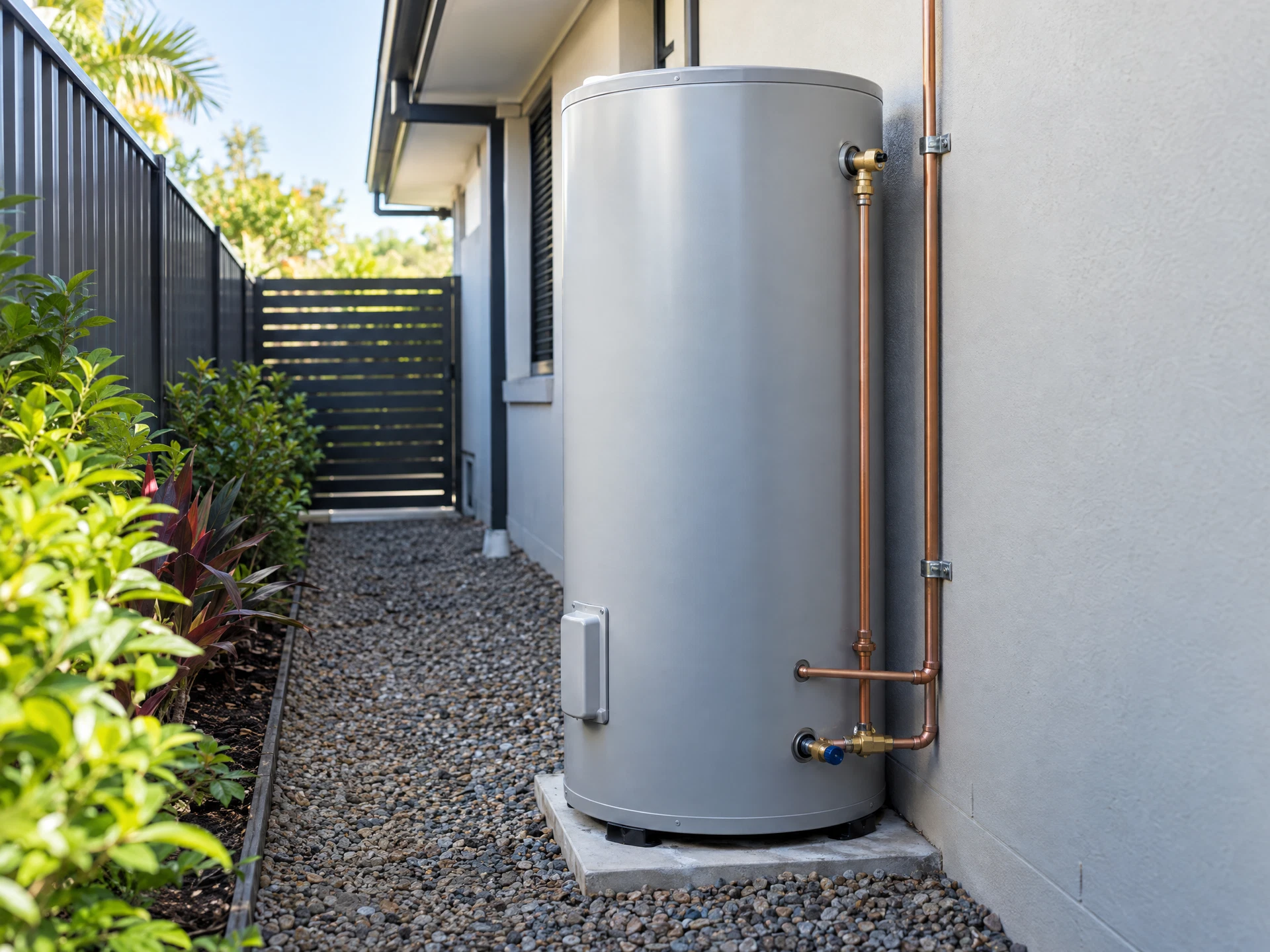
An electric storage hot-water system uses an element to heat water in an insulated tank. Its suitability and running cost depend on tank size, recovery time, household demand, controls and the electricity tariff.
How an electric storage system fits a home
Start with the current unit's capacity and the times the household uses hot water. A tank that is too small for a concentrated morning peak may run low; an oversized tank may require more energy to keep water hot. YourHome notes that tariff arrangements, heating controls and the household's usage pattern all affect how storage performs.
Some homes use controlled or off-peak electricity to heat a storage tank at particular times. That arrangement can change when hot water is replenished, so ask how much stored hot water is available during a peak period and what happens after unusually high demand. If rooftop solar is present, ask whether daytime heating controls are compatible with the system and household loads.
Running costs: compare your actual tariff
Running costs vary with the electricity tariff, system efficiency, standby losses, household demand and heating schedule. Compare current tariffs and the proposed model against your own usage pattern.
When comparing with gas, a heat pump or solar, include installation requirements and supply costs as well as energy use. See the guides to gas systems, heat pumps and solar hot water.
Tank condition and maintenance
Storage tank design and water quality matter. YourHome explains that glass-lined steel cylinders use a sacrificial anode that needs replacement every few years, while stainless-steel tanks do not require an anode. Maintenance recommendations depend on the product; follow the manufacturer's service schedule and arrange qualified help for faults.
YourHome reports typical tank warranty periods of 5–10 years for glass-lined steel and 10–15 years for stainless steel. Warranty periods are not the same as expected service life, which varies with the product, water conditions, maintenance and use.
What to check when replacing an electric unit
- Storage capacity and recovery against actual peak demand.
- Tank location, access, drainage, electrical supply and control settings.
- Whether the present tariff and heating schedule remain suitable.
- Condition and compatibility of valves, pipework and connections.
- Quote inclusions for removal, disposal, commissioning and changes to services.
Any regulated electrical or plumbing work should be assessed by the appropriate licensed tradesperson. Queensland guidance identifies electric hot-water replacement in existing homes as notifiable work; the installer can confirm current requirements for the specific job.
Electric versus heat pump
A conventional electric storage system uses resistance heating. A heat pump moves heat from the surrounding air into stored water and can use less electricity, but the unit's siting, noise, operating range, controls and installed price require assessment. A household with a tariff or solar setup may compare a heat pump with a controlled electric tank before deciding.
For household sizing and installation scope, see hot-water installation in Brassall. For replacement decisions, visit the replacement guide.
Electric hot water for Brassall homes
When replacing an electric system in Brassall, compare tank capacity, recovery time, current tariff and household routine. These practical details help you judge whether an electric storage system—or another option—fits your home.