
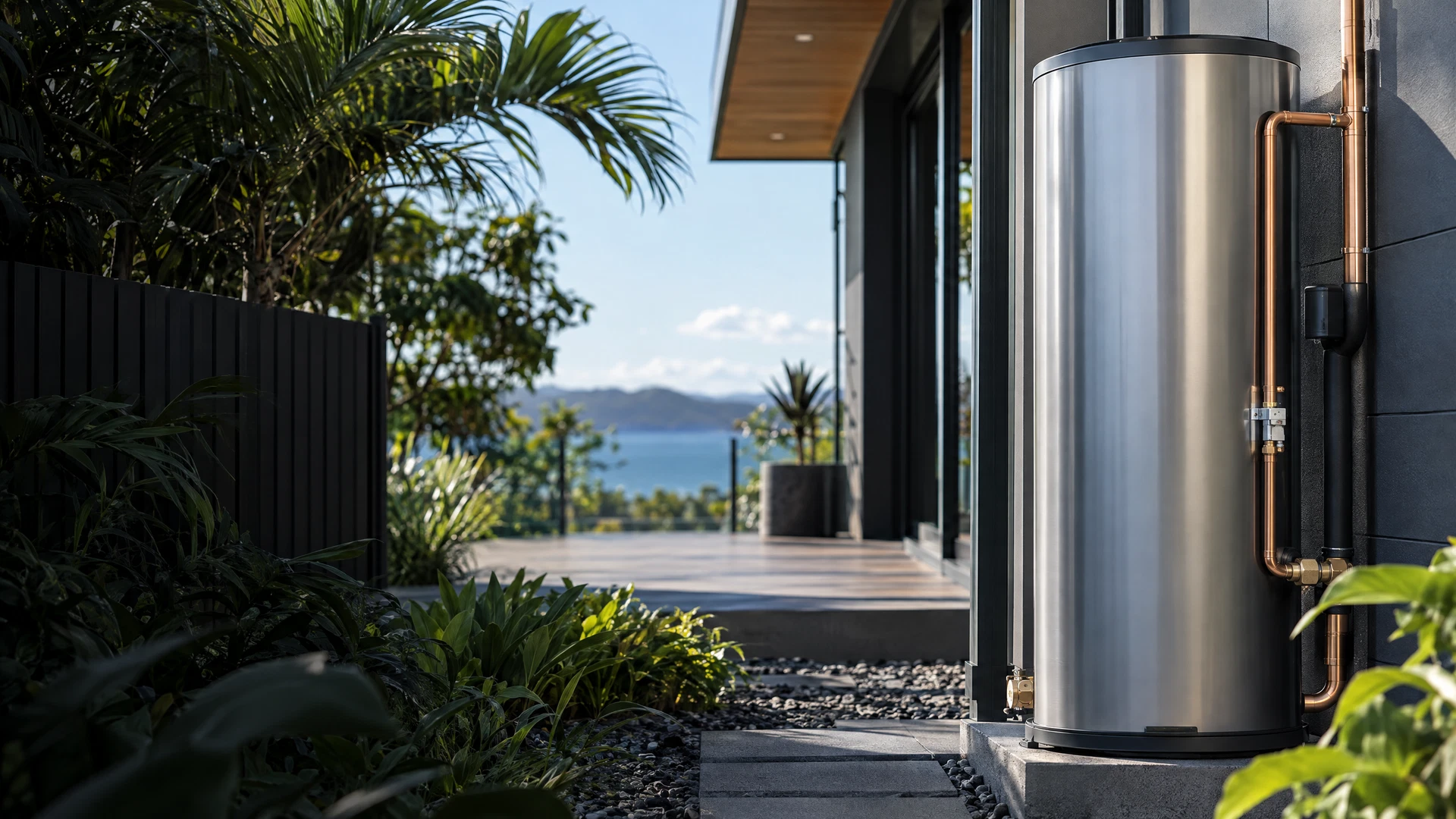
Planning hot water system installation in Brassall? The right unit is not chosen by household size alone. Think about when hot water is used, how much demand happens at once, which fuel and services are available, the place the equipment can sit and the work needed to connect it.
How is a hot-water system sized?
Storage systems need enough water for the household's peak periods, while continuous-flow systems are selected for the flow that can be demanded at the same time. Recovery performance, temperature settings, household routine and system controls also matter.
YourHome cites about 50 litres of hot-water use per person per day as a typical figure, but it is not a direct tank-size rule. A household that uses hot water at the same time may have a different demand pattern from one that spreads use across the day. Efficient shower fittings can also change demand. Ask an installer to explain the capacity and recovery assumptions behind the recommendation.
Select a system for the home
- Electric storage needs appropriate electrical supply, tank space and consideration of tariff and heating schedule.
- Gas storage or continuous flow needs an actual gas supply, suitable sizing and model-specific clearances; confirm whether the property uses piped natural gas or LPG.
- Heat pumps need a suitable location, airflow, clearances, drainage, access and attention to operating noise.
- Solar hot water requires site checks for roof orientation, shade, structure, collector layout, tank placement and booster operation.
Compare the installed system and ongoing arrangement, not just the tank price. Existing solar PV, available tariffs and household timing may change how an option works for the property.
What should an installation quote include?
Ask the installer to identify the model, capacity and system arrangement, where the unit will go, which services will be connected and what plumbing/electrical/gas work is included. The quote should clarify relevant valves and drainage, commissioning, controls or timers, old-system removal and disposal, exclusions, warranty conditions and what happens if concealed or unexpected work is discovered.
Ask who will perform and supervise the work and verify their current licence and scope. Queensland Government guidance says certain electric, solar and heat-pump hot-water installations or replacements in existing homes are notifiable work and advises checking the plumber's QBCC licence. Requirements depend on the job and current rules; confirm with the actual installer and read Queensland's plumbing-laws guidance.
Business Queensland guidance describes stored water being heated to at least 60°C and hot water delivered at taps at no more than 50°C through a temperature-control device for relevant domestic systems. The licensed installer should confirm the current rule and the requirements for the exact installation. See Business Queensland's hot-water guidance.
A clear installation process
- Record the present system type, symptoms, household size and times of peak use.
- Have the actual site and available services checked before choosing a model.
- Compare written quotes on the same scope, including included works, removal and commissioning.
- Confirm the licensed tradesperson who will perform regulated work and who is responsible for the job.
- At handover, get the product documents, operating instructions and service/maintenance advice.
Planning a hot water installation in Brassall
For Brassall and Ipswich homeowners, a well-planned installation starts with household demand, a suitable system and a clear written scope. An appropriately licensed installer can confirm the services, placement and work required at the property.