
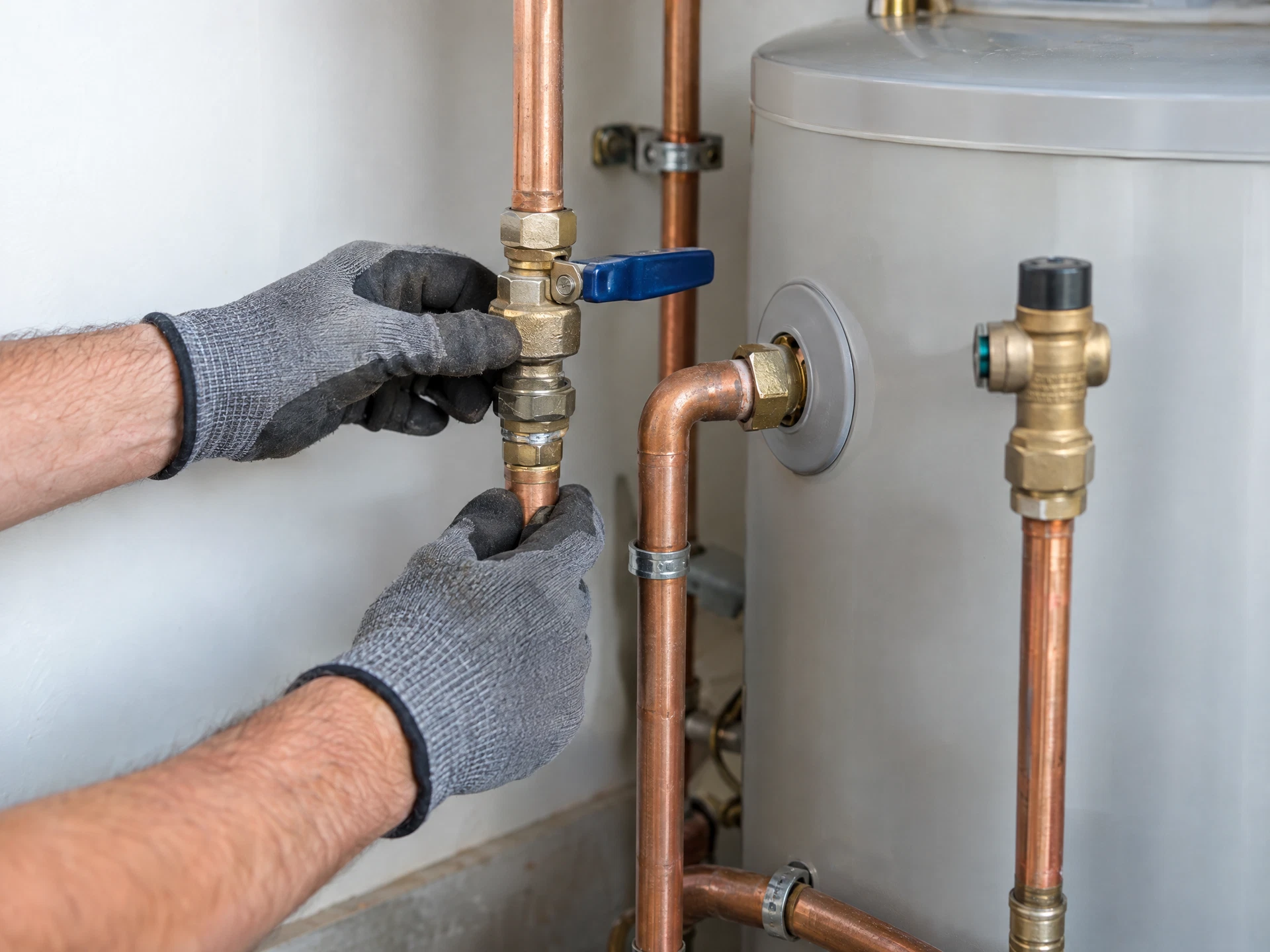
A hot-water fault can involve the appliance, its controls or a connection. The cause needs an on-site assessment. This guide explains what to note and how to stay safe while arranging professional help.
Why has my hot water stopped heating?
The cause may involve the power or gas supply, a control, a component or water flow. The checks depend on the system type and model, so avoid removing covers or trying to access internal parts.
Write down whether the issue began suddenly, whether any indicator or breaker changed, whether other taps are affected and whether the system is making an unusual noise. Do not remove covers or touch internal electrical, gas or hot-water components. If the fault is not obvious from the user controls described in the product manual, arrange a qualified assessment.
What if the hot water system is leaking?
Keep clear of hot water and wet electrical equipment. Do not touch wet switches, cables or the heater. Isolate water only if the correct valve is clearly identifiable and safely accessible. If not, or if water is near electrical equipment, keep away and get professional help promptly.
Water near a hot-water cylinder may come from a connection, valve or the tank itself. Persistent relief-valve discharge can relate to the valve or pressure conditions and does not by itself prove that the tank has failed. Never block or cap the relief outlet, and never replace the valve with a higher-pressure-rated one. Have the unit assessed by an appropriately licensed professional.
For current Australian guidance, see YourHome: Hot water systems. Shutoff instructions in a manufacturer's manual apply to the named model only; do not transfer them to a different product or to a gas system.
Temperature changes, noise and low supply
Water that runs out sooner than usual, varies in temperature or takes longer to heat may have several causes. Household demand, a change in routine, a control setting, a component fault or a system that is not correctly matched to demand can all be relevant. New noise can also deserve assessment, but sound alone does not identify the faulty part.
Record which tap or shower is affected, how long the system has been running, whether the problem follows multiple simultaneous uses and whether there is visible water. This information can help the plumber determine what to check.
Repair or replace?
Repair can be sensible when the fault is understood, the part is available and the rest of the system is in suitable condition. Replacement may be worth comparing when faults recur, a tank is confirmed damaged, or parts and repair cost make continued service impractical. Ask for the diagnosis, the repair scope and any replacement option in writing.
There is no single service-life figure that decides this for every system. Product design, water conditions, maintenance, use and warranty terms differ. The replacement guide explains cost factors and how to compare a repair with a new system.
What to note before a repair visit
- The system type and brand/model if the label is readable from a safe position.
- What happened, when it started and whether the issue is constant or intermittent.
- Whether the unit is leaking, where water appears and whether a valve is discharging.
- Whether other hot-water outlets are affected.
- Any change in fuel, power supply, household routine or usage.
Never open a sealed cover to find a model number or operate an unfamiliar gas/electrical control. If a leak creates an immediate hazard, keep people away and contact the appropriate emergency or trade service.
Emergency hot water repairs and after-hours calls
This website is not an emergency service. If an issue creates an immediate risk to people or property, move away from the hazard and contact the appropriate emergency service or a licensed trade provider directly.
Hot-water repair information for Brassall
For homeowners in Brassall and Ipswich, noting the system type and when the fault began can help prepare for an assessment. A licensed professional can diagnose the problem and explain whether a repair or replacement makes sense.