
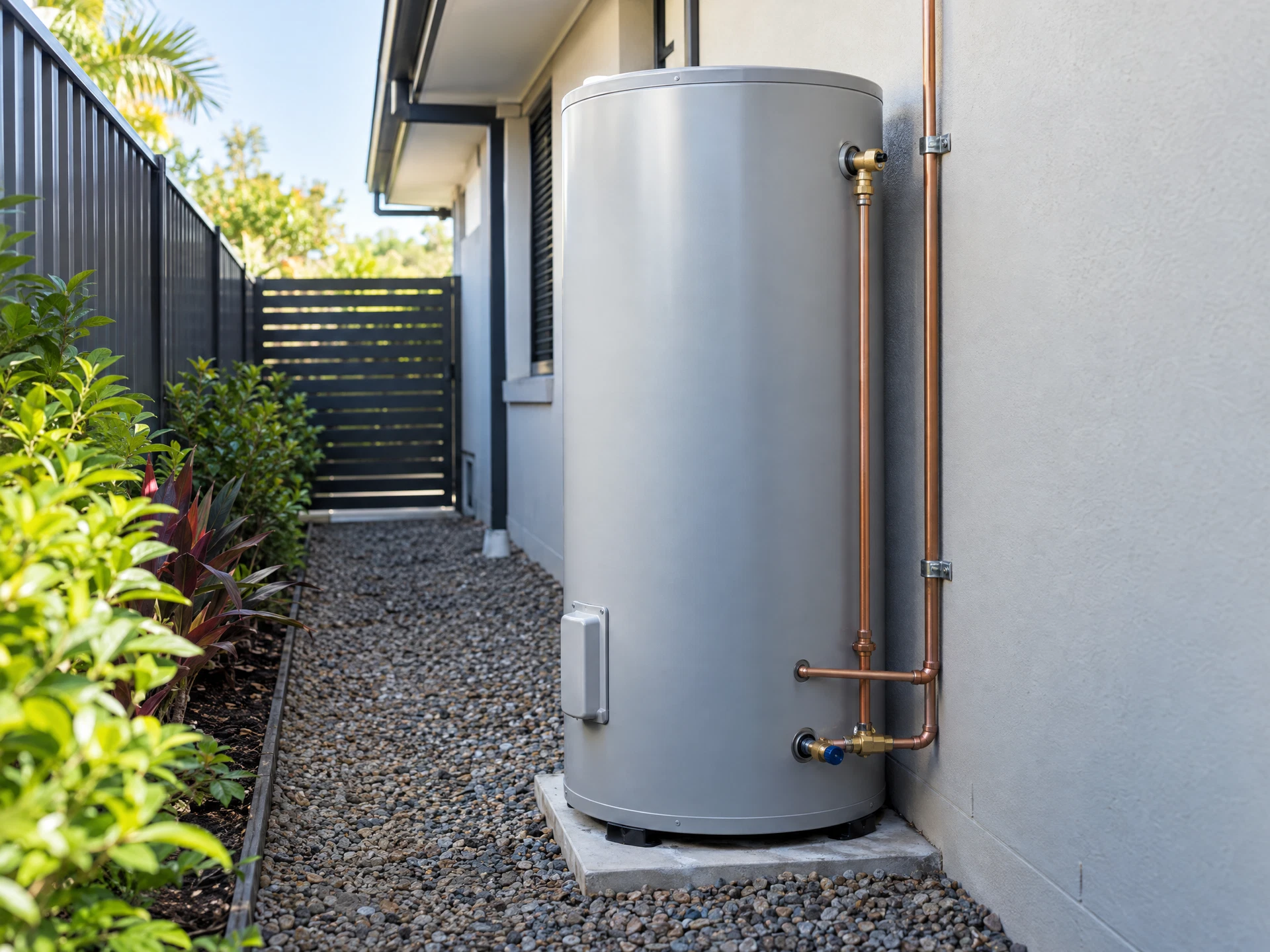
A failing hot-water system can disrupt the whole household. If you are looking for hot water replacement in Brassall, the useful first question is not simply “How old is it?” It is what has failed, whether the system remains safe, and whether a repair still makes sense for this particular unit.
Repair or replace? Begin with the cause
A leak, persistent relief-valve discharge, a reduced supply of hot water or a change in energy use deserves attention. None of those symptoms, on its own, proves that the storage tank has failed or that the entire system must be replaced. A valve or connection problem can look different from a tank fault; a qualified plumber can inspect the equipment and explain the options.
Replacement becomes worth comparing when faults recur, a part is unavailable, corrosion or tank damage is confirmed, or the repair cost and likely remaining usefulness make a new system the more practical choice. Ask what was diagnosed, what a repair would address, what it would not address, and whether replacement is being recommended for a specific reason.
YourHome reports typical tank warranty periods of 5–10 years for glass-lined steel and 10–15 years for stainless steel. That describes warranty periods, not a promised or expected service life. Water conditions, product design, maintenance and use can all matter. Read YourHome's hot-water guidance.
Signs that call for an assessment
- Water around the cylinder, visible corrosion or a damp connection.
- Repeated loss of hot water, inconsistent temperature or a system that trips or stops heating.
- A relief valve that continues to discharge or a change in the pattern of discharge.
- Unexplained changes in energy use or recurring repair visits.
- A system for which compatible parts are difficult to obtain.
These are prompts to investigate, not a diagnosis. A relief valve is a safety component that responds to pressure and temperature conditions. Never cap or block its discharge, and never fit a valve with a higher pressure rating. Read the instructions for the exact model and arrange service with a qualified professional.
What affects hot water replacement cost?
There is no useful one-price answer without knowing the system and site. A quote can change with the selected system type and capacity, existing electrical or gas services, access and positioning, pipe changes, drainage, safety valves, commissioning, and any work needed to remove or dispose of the old unit. If changing from electric to gas, solar or a heat pump, the required supply and location may also change the scope.
Ask for a written quote that names the system and capacity, describes included work, identifies any electrical or gas work and plumbing changes, and states whether removal and disposal are included. Ask what happens if the installer finds an unexpected issue. Do not compare headline prices until you know the scope is comparable.
What happens during a replacement?
- Describe the household and the fault. Note how many people use hot water, when demand peaks, what system is installed and what changed.
- Confirm the site. An installer checks access, location, services, drainage, clearances and any product-specific requirements.
- Compare options. Compare capacity, running costs, available services, solar access and maintenance against the home and household routine.
- Review a written scope. Confirm model, included labour and materials, commissioning, removal, disposal and exclusions.
- Arrange licensed work and handover. Verify who will perform the work and the applicable licence and notification requirements before booking.
Choosing a replacement system
Electric storage is familiar, with running costs influenced by the heating schedule and tariff. Gas storage and continuous-flow systems differ in space, fuel supply and peak demand. Heat pumps can use less electricity than conventional electric heating, but model, location, noise and installed cost matter. Solar hot water relies on collector placement and may use a booster.
Explore the details before deciding: electric, gas, heat pump and solar. For planning the work, see the installation guide.
Brands, models and product support
Look beyond the brand name when comparing models. Check the system's capacity, energy information, clearances, maintenance schedule and warranty, then compare those details with your household and installation quote. Product specifications vary, so use the manufacturer's current information and ask the installer how the model suits the home.
If your system is leaking
Keep clear of hot water and any wet electrical equipment. Do not touch a wet switch, heater or cable. Isolate water only if you can clearly identify the correct valve and reach it safely; otherwise keep away and seek professional help. A substantial leak or water near electrical equipment needs prompt attention. Manufacturer shutoff instructions can be model-specific, so do not generalize them to a different system.
If the system is showing signs of a fault, start with the hot-water repairs guide.
Hot water replacement in Brassall
For homeowners in Brassall and Ipswich, replacing a system is a chance to compare more than the unit itself. A clear diagnosis and written quote can help you understand which options suit your household and what the installation includes.