
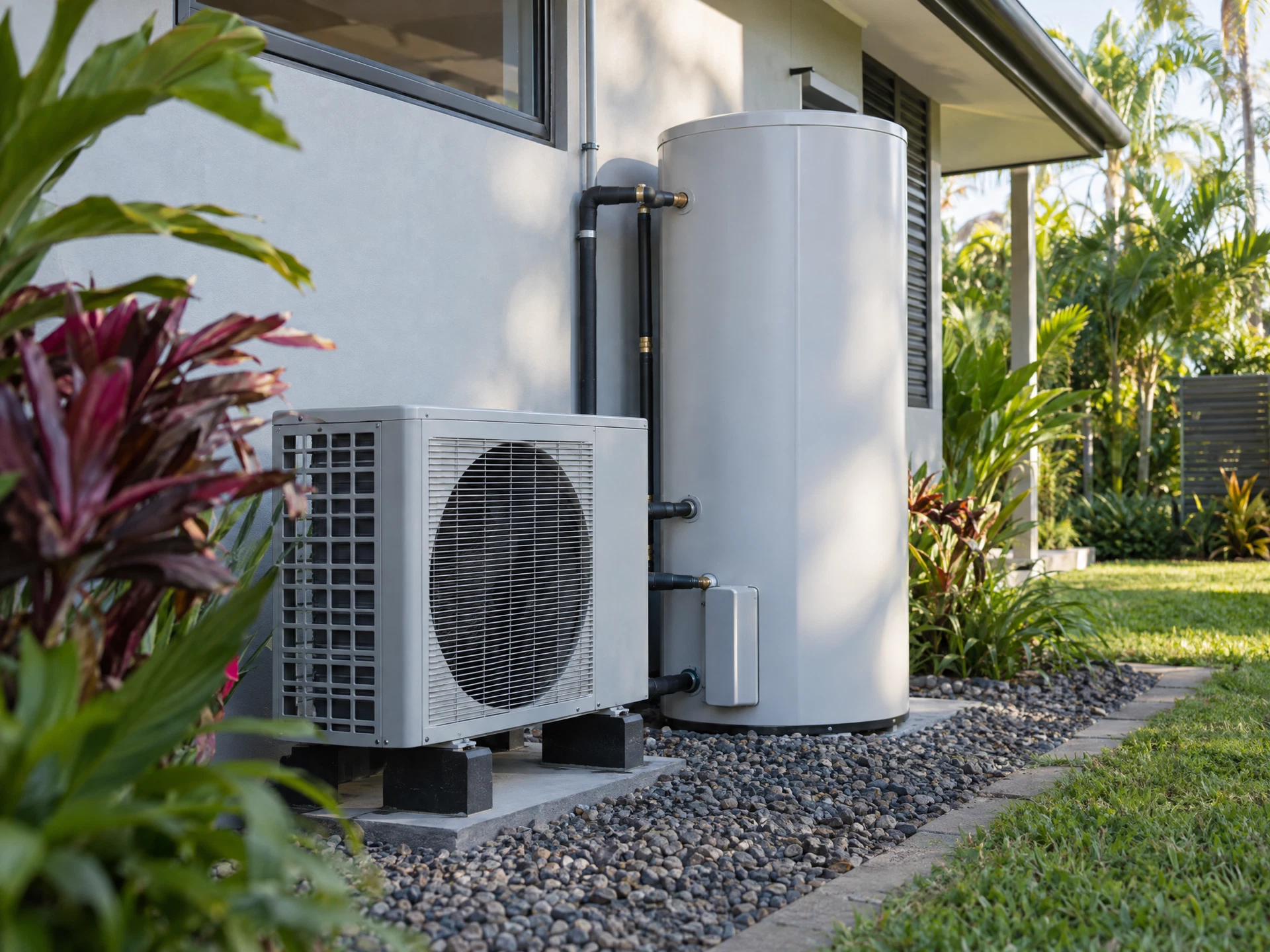
A heat-pump hot-water system combines a tank with an air-source heat-pump unit, either in one appliance or as separate components. Instead of making all heat with an electric resistance element, it moves heat from the surrounding air into the stored water. This can reduce electricity use compared with conventional electric hot water, depending on the exact system and how it is operated.
Heat-pump energy efficiency
Australian Government guidance says heat-pump water heaters use about 30% of the energy of a conventional electric hot-water system. That is a broad energy comparison, not a promise of a 70% bill reduction. Actual savings depend on your current system, electricity tariff, household use, settings, climate, model and installation.
A heat pump may be worth comparing when replacing an electric storage unit, particularly if the home has a suitable outdoor location and the controls suit household demand. A timer or rooftop solar may help coordinate operation, but savings are not guaranteed. Compare the installed quote with the model's published performance, not just a headline figure.
Check site fit before selecting a model
Air-source units need a location that meets product requirements for airflow and clearance. Consider where the compressor will sit, its operating sound near bedrooms or neighbours, condensate drainage, safe service access, electrical and plumbing connections, and the space needed for the tank. An integrated unit can be physically larger than an electric storage cylinder; a split system places the heat-pump component apart from the tank.
Operating-temperature limits vary by model. Check the manufacturer's stated range against the local climate and the proposed installation location.
Costs, incentives and product checks
Heat pumps can cost more to buy and install than basic electric storage. Compare the total installed price, service changes and expected running costs using the household's tariff and demand. Verify any stated rebate or payback before relying on it.
The Clean Energy Regulator maintains a list of systems that may be eligible for Small-scale Technology Certificates (STCs). Check the exact model name and installed configuration on the current CER register of solar water heaters and air-source heat pumps. A listing relates to certificate eligibility and is not a general endorsement of performance or a guarantee of a discount.
Questions for the installer
- Which exact model and tank capacity are proposed, and how were they matched to household demand?
- Does the intended location meet the model's airflow, clearance and operating-temperature requirements?
- How much sound does the unit make, and where will that sound be heard?
- Where will condensate drain, and is there safe maintenance access?
- What plumbing, electrical or other regulated work is included in the quote?
- How do the controls, timer and household electricity tariff affect operation?
- Is the exact model/configuration eligible for any current certificate, and who handles the paperwork?
Heat pump compared with other Brassall options
An electric storage system is often simpler to compare on upfront price; a gas system depends on the actual gas supply and flow demand; solar hot water needs a suitable site and may rely on a booster. Compare the electric, gas and solar guides alongside the installation checklist.
For Brassall homeowners replacing electric storage, a heat pump is one option to compare. Ask the installer to assess the location, household demand and expected running costs before selecting a model.