
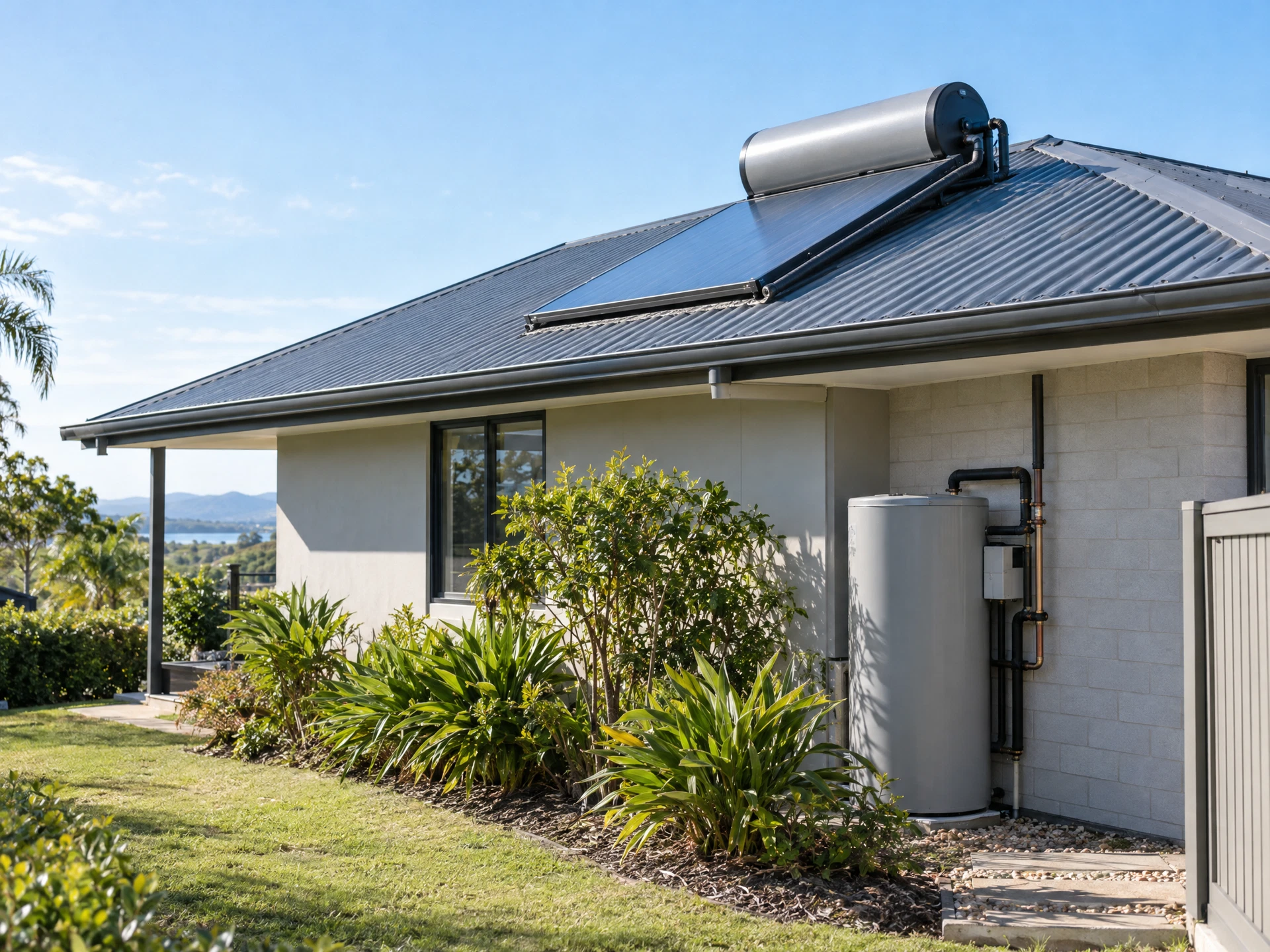
A solar hot-water system uses roof-mounted collectors to heat water for storage. An electric or gas booster can provide extra heat when sunlight is limited or household demand is high. The system controls determine when the booster operates.
Close-coupled and split systems
A close-coupled system places the tank on the roof beside the collector. A split system usually keeps the tank at ground level and pumps water between the tank and collectors. YourHome notes that active systems can cost more, require more maintenance and use pumping energy. The right layout depends on the home and the system.
Roof and site suitability
A solar installer will consider roof orientation, shade, collector space, roof condition, pipe route, tank location and maintenance access. YourHome identifies true north as the optimum orientation in Australia, while noting that collectors within about 45 degrees of north can perform without significant efficiency effects. The proposed system still needs to be checked at the property.
Trees, nearby buildings and roof pitch can affect solar performance. An assessment of the actual roof and proposed system is the best way to estimate suitability and likely output.
Boosting, timing and household routine
Solar input changes with sunlight. A booster helps supply hot water when the collector has not heated enough or demand is higher than expected. How often it operates depends on system design and use. A household that draws most hot water early may use booster energy before the day's solar collection; some systems allow timer or manual controls, and controls vary by product.
Ask how the booster is controlled, which fuel it uses and how the system responds after cloudy weather. Solar systems still use booster energy, so compare the expected contribution with a heat pump or an electric storage system paired with rooftop solar PV.
Costs, performance and current incentives
YourHome says solar systems can provide up to 90% of hot water depending on climate. This is a broad potential figure, not a guaranteed bill reduction. Actual performance depends on sunlight, roof orientation and shade, system design, booster use, household demand, tariffs, installation and maintenance.
Ask for an itemised quote and a calculation based on the actual site and model. If an STC or discount is discussed, verify the exact system configuration on the current Clean Energy Regulator register and confirm who handles eligibility and paperwork. Do not assume a rebate or a particular certificate value.
Maintenance and system life
Follow the product's service instructions. YourHome notes that glass-lined steel cylinders use sacrificial anodes that need replacement every few years, while stainless-steel tanks do not require an anode. Tank material and water quality can affect system selection.
Solar hot water compared with solar PV
Solar thermal collectors heat water directly for the hot-water system. Solar PV generates electricity that can run household loads, including some electric or heat-pump systems. Which approach makes sense depends on roof area, electricity use, equipment, tariffs, hot-water demand and the quote. A site assessment can compare the options without promising a payback.
Solar hot water in Brassall
For homeowners in Brassall and Ipswich, a solar hot-water assessment should consider the roof, household use and proposed system. A qualified installer can explain the likely performance and how the booster will operate.